AGP Executive Report
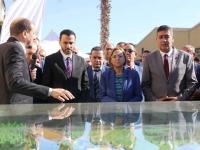
Last update: 2 days agoIn the last 12 hours, the most clearly Algeria-linked items are economic and institutional rather than environmental policy. A Türkiye–Algeria business forum in Ankara focused on expanding trade (with a stated target of $10 billion) and included agreements across sectors such as energy, construction, agriculture, textiles, and food. In parallel, Qatar’s Baladna and the UAE’s Al Dahra signed a memorandum of understanding on global farming and long-term animal feed supply—explicitly framed as supporting Baladna’s dairy operations across multiple markets, including Syria, and attended by Baladna Algeria board representation. Separately, a U.S. medical engagement article notes that LRMC’s Global Health Engagement program includes “engagements in Algeria” related to medical crisis management and healthcare system administration, indicating continued cross-border health diplomacy.
Also within the last 12 hours, coverage touches on environmental conservation and risk-adjacent themes, but not as Algeria-specific environmental governance. An okapi calf at a West Bank breeding center is described as “hitting all the milestones,” while other items in the same window are unrelated to Algeria’s environment (e.g., a Toulouse shooting; scholarship announcements for Tanzania; and a Nigeria nuclear-energy interview). Overall, the most substantive “environment-adjacent” signal in the last 12 hours is the agribusiness/feed-supply partnership, which can affect agricultural resilience and supply chains, though the evidence provided does not connect it to Algeria’s environmental policy directly.
From 12 to 72 hours ago, the evidence becomes more supportive of broader regional continuity: climate philanthropy across MENA is described as “held back” by donor structures and fragmented coordination, with Algeria, Libya, and Somalia mapped as having only one organization each—suggesting limited mapped climate-philanthropy activity in Algeria compared with other countries in the region. There is also coverage of Algeria’s foreign-policy posture on the Moroccan Sahara, and regional energy and shipping disruptions (e.g., Hormuz-related energy shocks and fertilizer/urea price pressures), which can indirectly influence Algeria’s environmental and food-security context, but the provided excerpts do not detail Algeria-specific environmental outcomes.
Looking further back (3 to 7 days), the dataset includes additional Algeria-relevant context that could matter for environmental reporting, but the evidence is sparse and not tightly tied to environmental policy. Examples include Algeria-related humanitarian/disaster coverage (flooding in Algeria kills 6; a separate report notes at least 6 dead after floods sweep northern/western Algeria) and Algeria-linked institutional/tech items (e.g., “AI Cloud Platform for Developers Launches in Algeria”). However, because these older items are not corroborated by multiple environment-focused headlines in the provided set, the overall picture for this week is that the most immediate, well-evidenced developments are economic/health/agribusiness and regional climate-finance constraints, rather than new Algeria-specific environmental regulations or projects.
Note: AI-generated summary based on news headlines, with neutral sources weighted more heavily to reduce bias.